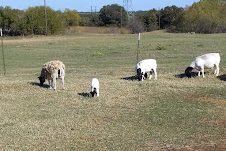
The past two months I have been making changes to my farm. Changes that improve the care and movement of the sheep, while shortening the time needed in the care of the animals. There have been projects that have lessen the impact of erosion and improving the soil for small areas to graze. So much work being done, and not much time to write.
The first project I started in August was building terraces where the water erodes and creates ditches. Water must flow downhill, but how fast and the path the water takes can be controlled a small amount. Since all my buildings and shelters are on the hillside, it is important that areas do not have ditches that continue to get deeper with each rainfall. A solution for me is to build terraces.
Terraces do not stop the water from flowing. What terraces to is slows the water and allows the water to spread outward away from a ditch flow pattern.
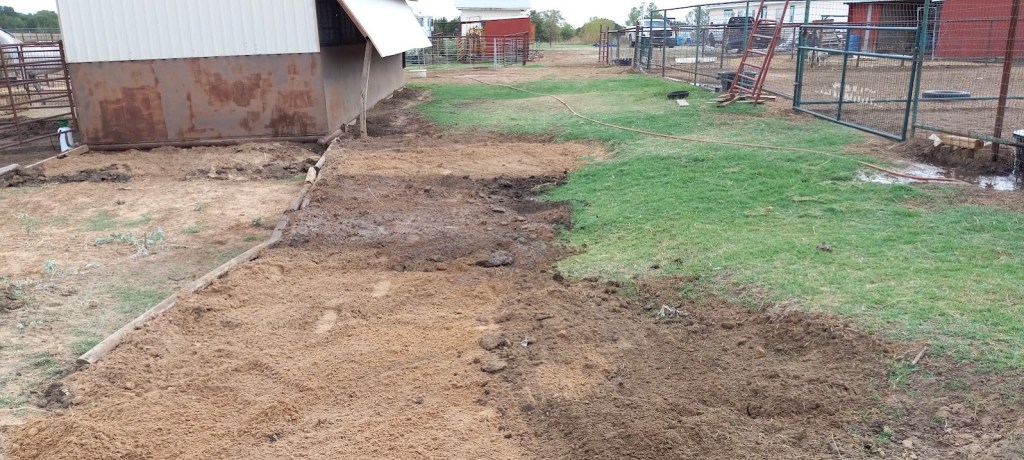
By putting in small raised areas that are fairly level, the water slows down in speed, lessening the erosion of soil, allowing for the water to soak into the soil and be retained for plant growth.
Using manure from the shelters and wood frames from my old raised garden I was able to create the terraces. The manure formed a plant nutritious layer, covered with soil for future growth of grasses. The wood boards formed a solid structure to hold the soil and manure in place until the grasses could grow covering the area. The wood boards will decompose, as they are already starting to decay.
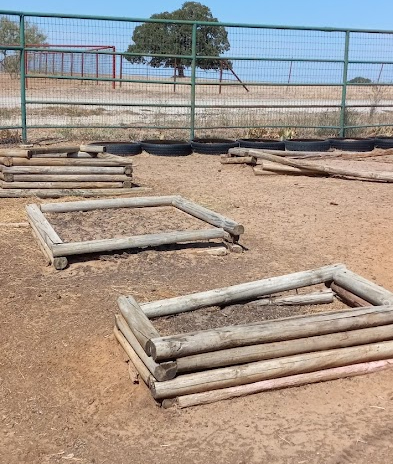
Since I was not using the raised garden beds anymore, and needed something to hold the soil in place until the grasses begin to grow, I recycled or repurposed.
To me farming is not just raising sheep to sell, but caring for the land as much as the animals. If the land is healthy and strong, then my animals can be healthy and strong.
Early spring I stopped grazing sheep on the pasture. There was no rain, no moisture so the grasses could not grow. This year I decided to plant winter wheat in the pasture in a no-till method of seeding the winter wheat among the existing grasses. I hoped planting the winter wheat would allow me to have pasture for grazing in the fall and winter months. I have no intention of harvesting wheat from the planting, only for grazing feed.
First of October, I noticed a neighbor seeding others’ pastures he was leasing to grow winter wheat hay. I asked if he could seed my pasture, as I had the seed but not the drill. He seeded my pasture after completing the pastures around us. After seeding the pasture in winter wheat, the rains arrived. Soon the wheat had germinated and was starting to grow.
Then we received a week of rain. After a week of rain, I checked my terraces. The terraces had done as I had hoped, not only did the erosion stop, but here was new grasses growing. The winter wheat was growing as well as the pasture grasses with the much needed moisture we received.
First week of November I was able to take the sheep off of hay, and graze them on green forage. The ewes with their soon to arrive lambs will be able to graze on green forage.

I am always thinking of how to improve my land, improve my sheep and learning new skills or methods to care for both.
Granny
 Granny's Homestead
Great job. It’s impressive how sometimes small jobs can make a considerable difference. Last Winter I build a small handling pen with half a dozen wood posts and sheep net at one of my sheep pastures. It’s a group of three pastures in the high place of the village far from the other pastures. It made a game-changing difference in handling the sheep on these pastures and allowing to keep the group there without having to move them a long distance. I was just writing a post about it when I read this one.
LikeLiked by 1 person
Any job, small or big can make a big difference when handling and caring for livestock. Thank you for reading and commenting. I have enjoyed reading about your farm and progress.
LikeLiked by 1 person